
The end of easy: why WA property needs marketing to do more of the work
If you’re in Western Australia’s property sector and you’ve noticed your enquiries starting to drop, you're not imagining it, and you're not alone. For a long stretch, the sector had it pretty good. Buyers showed up. Land sold. Display homes were busy. And for a lot of businesses, marketing was there to make things look polished rather than to do the hard yards.
That’s changing.
The market hasn’t collapsed, and it’s not a disaster story. It’s something more interesting, and more challenging: the easy sell is over. The businesses that do well from here won’t be the ones waiting for demand to save them. They’ll be the ones making themselves impossible to ignore.
The market is more selective now
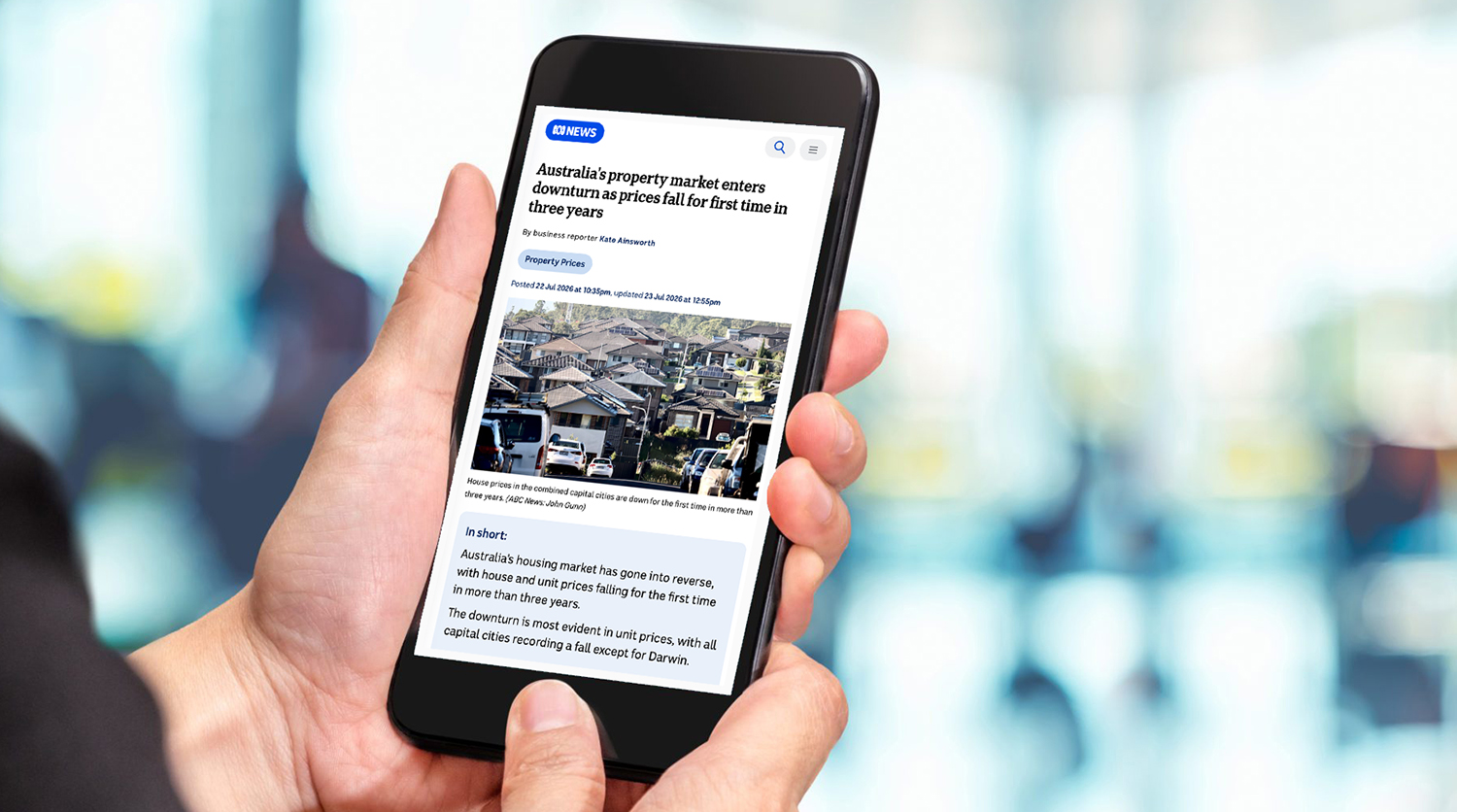
A softer market changes the job. When demand is strong, buyers often arrive halfway convinced. When demand cools, they arrive with questions, comparisons and hesitation. That means more effort is needed to turn attention into enquiry and enquiry into action.
That’s what’s happening now. HIA’s June 2026 update suggests the issue is not that people have stopped wanting to buy housing, but that confidence has dipped. UDIA’s 2026 outlook points to a mixed market and reminds us that housing delivery still needs real support. In plain terms, the market is still moving, but it is no longer moving on autopilot.
For property businesses, that is a big shift. Developers, land estate marketers, builders, architects and agents can no longer assume the market will do the heavy lifting for them. They have to earn it.
Brand suddenly matters more
This is where a lot of businesses get caught out. In the boom years, if you had the right product in the right place at the right time, the market often did the rest. Brand was important, sure, but it was not always urgent.
Now it is.
When buyers have more choice and more hesitation, the brands that win are the ones that feel familiar, credible and low-risk. That is why brand positioning matters so much in a softer market. It gives people a reason to choose you when they are comparing similar offers and trying to decide who feels safest to trust and who will deliver on their lifestyle goals.
Good marketing in this environment is not about shouting louder. It is about being clearer. It has to reduce perceived risk, sharpen your difference and help people feel more confident about moving forward.
Don’t go quiet
The instinct when sales slow is usually to trim marketing spend and wait for conditions to improve. That feels sensible in the moment. It also tends to be a mistake.
The reason is simple. If you go quiet, somebody else takes the attention. And when markets recover, the brands that stayed visible are usually the ones best placed to benefit.
That is why recession and downturn research keeps arriving at the same conclusion. Brands that keep investing through the soft patch are better positioned later. The work of Nielsen, WARC, Thinkbox, the IAB Australia, and Les Binet and Peter Field all points in the same direction: visibility matters, and brand-building does not stop being valuable just because the market gets harder.
In other words, this is not the time to disappear. It is the time to become more deliberate.
What businesses should do now
The best marketing in a softer market does three things. It builds trust. It creates preference. It keeps you front of mind while buyers take their time.
That means stronger proof, clearer positioning, better storytelling and more consistency. It also means thinking beyond the immediate sale. In property especially, people are not just buying a house, a lot or a development. They are buying confidence, certainty and a sense that they are making the right decision.
The opportunity is to invest in your brand now to protect existing demand, broaden awareness and stay in consideration for longer while buyers take more time to decide.
In practical terms, that means:
- Re-look at your positioning with a warier buyer in mind. In a slower market, buyers reward the business that can clearly answer ‘why you, not them?’
- Protect your share of voice. Even steady, modest visibility while competitors stand still or retreat is worth more than disappearing altogether.
- Speak to the emotional decision, not just the rational checklist. Whilst buyers still want rational reasons to buy, the brand that makes someone feel something usually wins.
- Protect high-intent demand while broadening targeting. Reach potential buyers before they start actively searching and comparing, so your brand is already in the mix when they do.
- Be deliberate about the media mix. Use mass-reach channels for awareness, such as radio, video and OOH, and pair them with conversion channels like Google, ChatGPT, Meta and programmatic to move people through the funnel.
That approach is especially important in property because the buying journey is longer, the decision is bigger, and confidence matters as much as price or product. Businesses that keep showing up now are the ones more likely to stay front-of-mind when the buyer is finally ready to act.
And that is where Likeable Creative comes in.
We've seen this play out across property businesses before, when the market gets quieter, the brands that keep communicating clearly, consistently and with purpose are the ones that hold attention and win more of the right enquiries. In our experience working with property brands, the businesses that perform best in softer markets are the ones that treat marketing as a growth lever, not a leftover cost.
We are experienced in branding, marketing communication and property industry marketing, and we understand what it takes to help businesses navigate a shift like this. If your market has changed, your marketing should change with it. We can help you sharpen your positioning, strengthen your message and make sure you stay relevant, visible and compelling when it matters most.
Because in a softer market, the goal is not just to be seen. It’s to be chosen.
Ready to get the edge on your competition and drive sales results through this shift? Talk to Likeable Creative and let's map out what it looks like for your business.
Sources and supporting evidence
- Housing Industry Association, Policy uncertainty weighs on new home sales (HIA New Home Sales Report, May 2026), June 2026.
- UDIA, State of the Land 2026: National Residential Greenfield and Apartment Market Study, March 2026.
- WARC, How to capture the full value of advertising performance, 3 April 2025.
- Nielsen, Marketing during a recession: Finding the upside of an economic downturn, 5 October 2022.
- IAB Australia, Advertising Through Economic Downturn: Guidance for marketers and advertisers.
- Thinkbox, Strategies for marketing through a downturn (compendium of empirical evidence on advertising investment in downturns).
- WARC, The Long and the Short of It: Measuring campaign effectiveness over time (Binet and Field, IPA effectiveness research update).

